Showing posts with label Ivo Perelman. Show all posts

Monday, July 6, 2026

Ivo Perelman/Matthew Shipp/William Parker/Bobby Kapp: Synesthesia

    The free improvisers Ivo Perelman, Matthew Shipp, William Parker, & Bobby Kapp present just over an hour of thoroughly engaged and telepathically connected instant compositions on Synesthesia. The title refers to a perceptual phenomenon where, in its simplest form, one sensory experience (color, for example) stimulates an involuntary experience of another type (like a musical note). Although the incidence of synesthesia in the general population is small, as Wikipedia tells us, “synesthetes are very likely to participate in creative activities.” These five lengthy improvisations, undoubtedly titled after the fact, refer to synesthetic experiences, like First Color Heard, Blue Taste, and the closing One Sense. The myriad connections among these veteran performers would take up way too much space. Just from listening, it should be clear to anyone that these four imaginative players and profound listeners have achieved a lofty level of spontaneous creation. There is so much at work in this music that it merits frequent listening and relistening to fully grasp the exquisite intensity of Synesthesia. The prolific Perelman frequently uses a duo format, which creates one sort of conversational dynamic. The quartet setting, in this traditional tenor sax plus rhythm section format, suggests a more careful and mildly restrained approach to the music. Here that’s all to the good. In parts of First Color Heard, for instance, Perelman seems to channel jazz phraseology from the past, at times sounding like Eddie “Lockjaw” Davis, of all people. Kapp’s delicate brushwork on Afterglow is the perfect complement to Shipp’s tender piano stylings and Parker’s calm bass lines, giving Perelman all the space he needs to rev things up. The jumpy One Sense, the longest track of the session, is an uptempo scorcher at first before it turns to a more contemplative mood to end the disc. The only thing to do is take a breather, and start listening again from the beginning. Totally recommended! 

defkaz records; Ivo Perelman (ts) Matthew Shipp (p) William Parker (b) Bobby Kapp (d); Brooklyn NY, December 2024; First Color Heard/ Phosphene/ Blue Taste/ Afterglow/ One Sense; 61:55. defkaz.bandcamp.com

Ivo Perelman/Nate Wooley/Matt Moran/Mark Helias/Tom Rainey: A Modicum of the Blues

     A Modicum of the Blues by a quintet of Ivo Perelman, Nate Wooley, Matt Moran, Mark Helias and Tom Rainey starts out with the familiar-sounding cautious bleeps and bleats of a free jazz ensemble, which slowly develops into a busy soundscape. It’s every man for himself, usually with just a hint of the blues to be heard. Sometimes it feels like a rehearsal for a song that no one seems to know, but the musicians are happy to wing it just the same. Things get pretty stormy around the eight minute mark in Part 1, driven by Rainey’s energetic drumming, with Moran’s vibes peeking in and out of the mix as a relatively calm presence in the general tumult. The music then settles right down, as if the wildness of the last few minutes has drained everyone’s energy. Perelman has recorded duet sessions with Moran, Wooley, and Rainey. Helias and Rainey have worked often together in the last 36 years, including a trio session with Perelman and a quartet date that added pianist Matt Shipp. Combining all those talents into creating a cohesive statement as this session does, is to underscore the way that Perelman casts his sessions. When Perelman and Wooley open Part 3 with a display of matching high notes, followed by Helias’ bowed bass and Moran’s bell-like vibes, it’s their previous associations that provide the foundation for their mutual interactions in this larger setting. In the true spirit of free playing, Rainey lays out for the first minutes before introducing a busy rhythm that gooses the improvisation along. The blues feeling is most pronounced in Part 4, introduced by Helias’ firm bass lines and soon picked up by an alternately growling and soaring Wooley with delicate touches from Moran and Rainey. Part 5 leads off with bass and saxophone duet that starts out with heads figuratively butting before slowly dovetailing into a more subdued encounter as the rest of the ensemble comes into the picture. Notable in this piece is a dialog between Rainey’s drums and Moran’s vibes, with Helias’ bass happily caught in the middle. At the same moment, Perelman and Wooley rejoin the fray for the final few minutes of Part 5, with Perelman getting the last word as everyone else drops out. A Modicum of the Blues is a stellar example of the ethos of totally free improvisation in a small group context. Recommended. 

Fundacja Słuchaj; Nate Wooley (tpt) Ivo Perelman (ts) Matt Moran (vib) Mark Helias (b) Tom Rainey (d); Brooklyn, NY, May 2024; A Modicum Of Blues part 1-5; 46:43. sluchaj.bandcamp.com

Tuesday, February 17, 2026

Ivo Perelman: Duos with Ray Anderson, John Butcher & Wadada Leo Smith


     Tenor saxophonist Ivo Perelman & Ray Anderson on trombone were half of the quartet that recorded Molten Gold in October 2022. Just a couple of months later, Perelman and Anderson were back in Jim Clouse’s Park West Studio in Brooklyn for a series of improvised duets they’ve titled 12 Stages of Spiritual Alchemy. One source I ran across described “spiritual alchemy” as the “art of inner transformation,” which seems as good a way as any to conceptualize the totally free approach to a musical encounter. In the act of freely creating and responding to a partner, the inner transformation manifests as sound. While that might be a needlessly metaphysical approach to the experiential act of just making it up as you go along, the idea of transformation does provide a loose philosophical framework to the proceedings. Anderson is a playful and often humorous musician. To respond to Perelman’s wildest flights of fancy, he draws on the entire history of trombone, from the early tailgate stylists through the modernists and his own brash tone. Coagulation is a good example, with both players rocking back and forth between two notes, sometimes in sync and sometimes not. But in truth, anywhere that you dig into 12 Stages will reveal fresh facets of this collaboration. Larded with surprising quotes from all over, this is an enjoyably approachable and good-hearted collaboration. With Perelman as prolific as he is, it might be tough to know where to start with his music. The highly enjoyable 12 Stages of Spiritual Alchemy would be an excellent place to begin. Fundacja Słuchaj; Ray Anderson (tbn) Ivo Perelman (ts); Brooklyn NY, December 2022; Separation/ Calcination/ Putrefaction/ Dissolution/ Coagulation/ Conjunction/ Sublimation/ Exaltation/ Projection/ Multiplication/ Fermentation/ Cibation; 55:19. sluchaj.bandcamp.com
 

    What happens when a pair of consummate improvisers and connoisseurs of extended saxophone techniques meet up for a session? It’s likely that Ivo Perelman & John Butcher merely said hello to one another as they arrived at a London studio to record Duologues 4. A series of buzzes, bird sounds, squeaks and squawks, and even odd fragments of melody ensue in improvisations that last from just under four minutes to a bit over nine minutes. The mildly competitive dueling that almost inevitably arises in the free improvisational duo situation leads to one player following or subverting the other’s contribution, jumping high up on the horn or deep below into the muddy bottom, sudden shifts in the speed of the music, and much more. While there are plenty of quiet moments throughout the session, things can get gnarly and gritty awfully quickly. The best 30 second example of that is the sweetly dovetailed conclusion of #7 and the reed noises and swirling tones that lead off #8. Decidedly not for the faint of heart, Duologues 4 is an invigorating encounter that’s equally eccentric and absorbing. IBEJI; Ivo Perelman (ts) John Butcher (ss, ts); London, England, November 2024; eight untitled improvisations; 48:22. ivoperelman.bandcamp.com
 

    It’s a delightful matching of wits when Ivo Perelman & Wadada Leo Smith team up for a seven part sequence of unbridled free improvisations, released as Duologues 5. Tenor saxophonist Perelman’s deep and broad sound introduces the proceedings, and the much-accomplished trumpeter Smith responds with long tones, simple lines interspersed with blasts of sound, and some mute work. Smith has collaborated with dozens of prominent creative musicians since his debut on record in 1968 on Three Compositions Of New Jazz (Delmark, 1968) by Anthony Braxton, which was Braxton’s debut as well. He’s also particularly drawn to the duo format, appearing on record with percussionists Ed Blackwell, Adam Rudolph, Gunter “Baby” Sommer, Jack DeJohnette, Louis Moholo-Moholo, Milford Graves, electric bassist Bill Laswell, bassist John Lindberg, and multi-instrumentalist Braxton, among others. Smith has retained his piquant and penetrating sound into his eighties, and he sounds as fresh and spirited as ever on this set. The overall mood is reflective and cooperative, with Perelman keeping mostly in the usual tenor range. The mutual respect and their joint fascination with the nuances of sound make this a special encounter indeed. Warmly recommended. IBEJI; Wadada Leo Smith (tpt) Ivo Perelman (ts); Brooklyn, NY, May 2024; seven untitled improvisations; 42:49. ivoperelman.bandcamp.com
 

Monday, April 7, 2025

Ivo! Ivo! Ivo!

     The following batch of reviews of Ivo Perelman releases in 2024 was already late when I started to get it together in January. Due to a series of personal and technical setbacks, it’s now really late. But the music, obviously, is still out there, and in the spirit of “better late than never,” I figured it was time to get this published.

    It’s nearly impossible to keep up with the spectacularly prolific tenor saxophonist Ivo Perelman. His ethos of totally free improvisation with no preconceptions is dependent on like-minded collaborators, and over the years, he has continually expanded the pool of allies. You might say that Perelman “orchestrates” his sessions by choosing the right partner or partners for a given session in a similar fashion to the way that Duke Ellington would create his music based on the particular talents and predilections of specific individuals. Of his baker’s dozen releases in 2024, no two feature the same lineup of musicians. Here is a look at most of them, with links to a couple of previously released sessions:
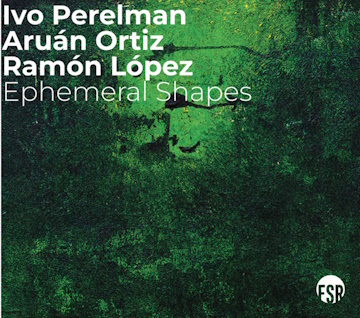
    First out of the gate last year was the aptly titled Ephemeral Shapes. The trio of Ivo Perelman, Aruán Ortiz & Ramón López created vigorous and absorbingly dynamic sounds at this session, recorded in Barcelona in the spring. The lengthy shape 1 delineates many of the possible approaches to the tenor sax, piano and drums trio, and the remainder of the date features generally shorter pieces that focus in on various strategies and concepts that the opening establishes. To note just a few of them: shape 2 is cautious and somewhat melancholy, starting out quietly before then growing slowly into a kind of ecstatic intensity, then relaxing again until it reaches silence. López’s delicate brushwork on the gracefully paced shape 4 is a special treat. Perelman introduces shape 5 as if he’s about to play the blues before quickly taking off in another direction, with the fleet-fingered Ortiz and the sensitive López racing alongside. The delicate interplay of shape 6 gives the music an unusually emotional aspect, which makes it one of my favorite tracks of the date. That nuanced approach continues at the start of shape 7, which goes on to include an energetic duet exchange by Ortiz and López before Perelman re-enters the fray with some fiery high-register excursions. Ephemeral is the closing track, just under four minutes of summing up with a blast of interactive fireworks. Ephemeral Shapes is a winning effort. While perhaps ephemeral in the moment of making music, there always lurks the inevitable contradiction of preserving sounds, and to listen again and again. Fundacja Słuchaj; Ivo Perelman (ts) Aruán Ortiz (p) Ramón López (d); shape 1/ shape 2/ shape 3/shape 4/ shape 5/ shape 6/ shape 7/ Ephemeral; Barcelona, Spain, May 7, 2024; 47:13. sluchaj.bandcamp.com
    Interaction presents a series of twenty improvisations by a trio of Ivo Perelman, Barry Guy & Ramón López that dates back to 2017 Paris sessions Paris. It takes a widely experienced bassist to match wits with the endlessly inventive Perelman, and Barry Guy is certainly that. From his earliest recordings with the Spontaneous Music Ensemble in 1966 and 1967, Guy has consistently associated with the boldest and most progressive musicians on the scene. Derek Bailey, Howard Riley, Paul Rutherford, Evan Parker and so many others have all collaborated with Guy in a wide range of improvisatory settings. Both Guy and Perelman were members of the Ramón López Freedom Now Sextet that released one album in 2009, so there’s a bit of history leading up to this trio. Their previous association serves them well here, as they explore the rarefied realm of instant composition in pieces that range from just over ten minutes to under two minutes. López’s playing is largely on the subdued side, leaving it to Perelman’s tenor excursions and Guy’s boldly inventive bass to lead the way. The velocity of the trio’s interactions seems to be the main focus of the group mind throughout the date, as the music plunges forward or stops on a dime. Interaction is a thoroughly enjoyable and distinguished collection, and a gem of freely improvised music. Ibeji Music; Ivo Perelman (ts) Barry Guy (b) Ramón López (d, tabla); Paris, France, 2017; Disc 1 (73:38): Tracks 1-11; Disc 2 (55:08): Tracks 1-9.
    Perelman’s most frequent musical partner is pianist Matthew Shipp. Magical Incantation is the latest excursion by the Ivo Perelman/Matthew Shipp Duo. More often than not, there are no titles on Perelman’s releases, just “track 1,”“ track 2,” and so on. For this date, the pieces are given names, with titles like sacred values and vibrational essence that are revealing of the spiritual intentions behind the concept of totally free improvisation. The opening piece, prayer, belies the general belief that free improvisation implies noisy and aggressive combinations of sounds. The utter gentleness of this piece sets the tone of the album, though the forty-five minutes of Magical Incantation is certainly not without its moments of heightened and intense passages. Take incarnation as one example, opening with Shipp’s forceful chording and Perelman’s treble screech before shifting into the kind of unified chase sequence that you’d swear had to be written, but of course was invented on the spur of the moment. It’s a whirlwind of sound, and a revelatory microcosm of the Perelman/Shipp duo in just under six minutes. Periodically, Perelman and Shipp have declared that there isn’t much more for them to explore as a duo, only to start up again and dazzle us with their endlessly creative wizardry. Magical Incantation is the latest radiant expression of their mutual admiration society. Soul City Sounds (CD & digital album); Ivo Perelman (ts) Matthew Shipp (p); Brooklyn, NY, April 23, 2024; prayer/ rituals/ lustihood/ enlightenment/ sacred values/ incarnation/ vibrational essence/ magical incantation; 45:55. soulcitysounds.bandcamp.com

    The hard-blowing tenor saxophonist Ivo Perelman is most often heard in a duet context, with a wide range of instrumentalists. Water Music, a RogueArt release by the Ivo Perelman Quartet, represents a new departure for the restlessly creative Perelman. With long-term duo partner Matthew Shipp at the piano, bassist Mark Helias on bass, and Tom Rainey on drums, this set is far from a typical sax-and-rhythm section affair. Pianist Shipp and bassist Helias have logged three previous recorded encounters since 2018, while Helias and drummer Rainey have recorded together frequently since a 1990 Helias session, often in Helias’ Open Loose ensemble. Perelman’s concept, of course, involves totally free improvisation, with nothing preconceived. It seems to this non-musician that utilizing musicians who have some prior playing experiences with one another and thereby developed a degree of mutual rapport would help in the creation of genuinely creative and cohesive music. And sure enough, the proof is in the listening. This quartet makes quite a racket when they have a mind to. The title track is a great example of the quartet’s proclivities, starting hard and fast, then slowing down to a crawl as they leave space for Helias’ invigorating bowing. Perelman’s high end yelps match wits with the bowed bass, as Shipp supplies his idiosyncratic voicings and Rainey keeps the whole thing from falling to pieces. The pace increases once again, a decision of the group mind that this ensemble exhibits throughout the date. Perelman’s releases tend not to have titles for the tracks, so their presence on Water Music gives the listener some clues about the feeling behind the music. In the absence of chord structures or strict tempos, naming pieces Life force or Fluidity can give the listener at least a small clue to the feeling that the quartet wishes to generate. Of course, the titles can mislead as well. The finale, Flow, doesn’t really flow much of the way through its nine minutes, concluding with a staccato section that everyone finds congenial, then ending abruptly. All in all, Water Music is yet another stirring date from Perelman and friends. Seriously recommended. RogueArt ROG-135; Ivo Perelman (ts) Matthew Shipp (p) Mark Helias (b) Tom Rainey (d); Brooklyn, NY, November 22, 2022; Entrainment/ Life Force/ Sound essence/ Human intuition/ Boundless/ Water music/ Fluidity/ Flow; 52:56. roguart.com
    Ivo Perelman clearly enjoyed the experience of his Water Music session. Truth Seeker, a trio date with Mark Helias and Tom Rainey followed just a month later. (I wrote about it here, and it was included in my “best of 2024" list, found here.) Eighteen months later, Perelman began his Duologues series with Duologues 1 : Turning Point with the sax and drums duo of Ivo Perelman & Tom Rainey. The resulting session is a joyous set of typically unbridled free improvisation. Perelman sounds especially inspired. His daring leaps from the bottom of the tenor’s range to the seemingly impossible upper reaches of the sax are full of surprises, with an immense vocabulary of squeals, honks, cries, moans, and much more. In the stratospheric range he has no peers in the lucid manipulation and clarity of his tone. Rainey is an all-around drummer, whose immense discography (232 sessions in the Lord Discography since 1980) attests to both his talent and his openness to a broad range of improvisational approaches. You might call the pairing of Perelman and Rainey to be a match made in music heaven, as they balance and stimulate one another in the process of creating these instant compositions. Recommended. Ibeji Music; Ivo Perelman (ts) Tom Rainey (d); Brooklyn, NY, April 17, 2024; 7 untitled improvisations; 56:13.
    I wrote about another quartet date, Embracing The Unknown, here; it’s also one of my selections for the best of 2024.
    The duo of Ivo Perelman & Nate Wooley brings together two fearless improvisers, each committed to exploring and extending the limits of their instruments. Tenor saxophonist Perelman and trumpeter Wooley have recorded together in a number of settings since 2017. Polarity 3 marks the third occasion that they’ve played in duo format. Over the course of just over an hour, the pair continues to display the mesmerizing playfulness that characterizes their encounters. The instant music that they create ranges from genuinely calm unisons (the opening track) to brief outbreaks of brutal noise and so much more. I get the distinct feeling that the musicians were just as surprised at the sounds they were making as the home listener is likely to be. Wooley’s extended vocabulary of bleats, blasts, and blurred runs is balanced by smooth and rounded passages of pure trumpet. Perelman likewise runs the gamut of soaring melodies, gritty rumblings in the bottom end, squeaks, burbles, and skittish squiggles in the extreme upper ranges of the sax. There are so many beautiful moments to savor: the moody calmness of Two, the duel of matching wits in the upper registers on Five, the growly noodling on Eight, and so much more. Bold and absorbing music that deserves to be heard again and again. Burning Ambulance #3; Nate Wooley (tpt) Ivo Perelman (ts); Brooklyn, NY, June 2024; One/ Two/ Three/ Four/ Five/ Six/ Seven/ Eight/ Nine/ Ten; 62:47. burningambulancemusic.bandcamp.com
    Two tenor saxophonists, Ivo Perelman & Ingrid Laubrock, match wits and meld their sounds on Duologues 3 : Crystal Clear. I can’t really tell the difference between them most of the time. Just when I think it’s Perelman on the left, I hear something on the right side that makes me think twice. What I do hear, all the way through, are two masters of improvisation and tonal control having a great time in the studio. By and large, the pair eschews the virtues of contrast, and seem more engaged in closely matched phrases and sonorities. But when they have a mind to engage in some fireworks, as they do when they figuratively battle in the second half of Two or most of Five, the energy level rises along with the complexity of their torrents of sound. The results are simply thrilling. The slowly evolving and calm Three is a gem of free improvisation, proving once again that the genre doesn’t have to rely on fast tempos and plenty of screaming. I’ve been listening closely and writing about Perelman’s music since around 2000, and the beguilingly vivacious Crystal Clear is a new favorite among his dozens and dozens of recordings. Definitely recommended. Ibeji Music; Ivo Perelman, Ingrid Laubrock (ts); Brooklyn, NY, 2024; One/ Two/ Three/ Four/ Five/ Six/ Seven/ Eight/ Nine; 48:53.

Thursday, June 13, 2024

Ivo Perelman & James Emery: The Whisperers


  Tenor saxophonist Ivo Perelman & James Emery, the acoustic guitarist and co-founder of the String Trio of New York, engage in a series of spirited dialogues on The Whisperers, as Perelman’s leaps and skitters of sound find their match in Emery’s fractured guitar lines. Perelman’s sudden jumps in pitch and his exploitation of the altissimo range of his tenor are on the left side of the stereo image. Emery’s unusual voicings, and an immaculate technique which allows him to switch rapidly between single-note runs and flurries of strummed chords, plus his own grab bag of extended techniques, are all on the right. Their excursions into sound, transparently recorded by Perelman’s usual engineer Jim Clouse, make for exquisitely involving headphone listening. The delirious high-wire act of track two, a high-velocity improvisation that’s full of blustery and excitable tenor and jagged bursts of guitar, grabbed me right away. Track ten, with its twisted and abstracted take on the blues, is a marvelous concoction. Track four is another of my favorites of this set, as a braying Perelman and a hard strumming Emery come together and apart and then together again in a genuinely audacious display of the improvisers’ art. This set came out in August 2023, and got lost in the shuffle. I’m glad I found it again; highly recommended. 

Mahakala Music MAHA-065; Ivo Perelman (ts) James Emery (g); Brooklyn, NY, February 2022; Twelve untitled improvisations; 52:59. mahakalamusic.com


Monday, May 20, 2024

Ivo Perelman, Mark Helias & Tom Rainey: Truth Seeker


  Tenor saxophonist Ivo Perelman continues to enlist new faces and sounds into his world of totally free improvisation. On Truth Seeker, the line-up is Ivo Perelman, Mark Helias & Tom Rainey for over an hour of robust instantaneous music making. Bassist Helias made his first recordings in 1977 with an Anthony Braxton quintet. Since then, he’s been heard with Dewey Redman, Anthony Davis, Barry Altschul, Jane Ira Bloom, and many, many others. The equally experienced Tom Rainey has played drums for a vast array of leaders, including Jane Ira Bloom, Fred Hersch, Kenny Werner, Tim Berne, and dozens more. And naturally enough, Helias and Rainey have found themselves in the studio together regularly since Helias’ Attack The Future CD for Enja (1990). Not long before Truth Seeker was recorded, Helias and Rainey joined Perelman and pianist Matthew Shipp for a Rogue Art release, which set the stage for this trio date. From the very first notes of the title track which opens the disc, their capacious rapport is apparent. Perelman starts the piece exploring the bottom ranges of his tenor sax, but within 4 minutes, he’s screamed his way to the outer limits. A charmingly peaceful bass and drums duet ensues as Perelman takes a short break, and the range of possibilities comes into view. Whether the music is peaceful, frenzied, or somewhere in-between, the collective inspiration never flags. Perelman’s gorgeous inventions on Devotion are breathtaking (no pun intended), as the rich throb of Helias’ bass and Rainey’s propulsive drums provide a suitably energetic backing. Bass and drums slowly grow quiet and then drop out, allowing for a calm and careful saxophone coda. Helias and Rainey kick off Mystical Vibration, then proceed to play with assertiveness when Perelman sneaks in with melodies in the upper reaches of his sax. Soon, Helias is wielding his bow and Rainey is paying a lot of attention to his cymbals. Things get awfully squeaky and dramatic for a few minutes before settling down again to explore new directions. And that’s the way the program proceeds, as they investigate some of the myriad sonic textures of a sax, bass, and drums unit. One of the more impressive aspects of this date is their uncanny synchronization in producing shifts in the velocity of the music. While it’s pointless to pick favorites on a session like this, as each piece proceeds to offer its own distinct rewards, I will note the fury of Spiritual Growth, the chattering introspection of Ubiquitous Light, and the tangled shards of melody on Life’s Meaning as particularly gripping excursions. Unreservedly recommended. 

Fundacja Słuchaj; Ivo Perelman (ts) Mark Helias (b) Tom Rainey (d); Brooklyn, NY, December 2022; Truth Seeker/ Devotion/ Mystical Vibration/ Spiritual Growth/ Ubiquitous Light/ Life's Meaning/ Intuition; 66:43. sluchaj.bandcamp.com


Monday, March 25, 2024

Ivo Perelman/Chad Fowler/Reggie Workman/Andrew Cyrille: Embracing the Unknown

  Reggie Workman’s musical saw and Andrew Cyrille’s percussion are the first sounds you hear on Embracing the Unknown, a tremendously exciting new release by the quartet of Ivo Perelman, Chad Fowler, Reggie Workman, & Andrew Cyrille. Tenor saxophone giant Perelman’s basic vision serves to embrace the unknown by leaving all preconceptions behind when starting to play. Chad Fowler, performing boisterously on stitch and saxello, makes a fine partner in the front line with Perelman’s commanding tenor playing. Both bassist Workman and drummer Cyrille, now in their 80's, are oriented to positive listening and immediate responses to what they’re hearing from the other players. Between them, they have participated in over 450 sessions over the decades, and they’ve played together many times since they both worked in the Jazz Composer’s Orchestra back in 1968. Cyrille played in the Reggie Workman Ensemble in the Eighties, Workman played in Cyrille’s quintet in the early Nineties, and the pair also appeared frequently with saxophonist Oliver Lake as Trio 3, so it is obvious that there’s a mountain of mutual respect. It’s worth noting that Cyrille’s first appearance on record was in 1961 with the master saxophonist Coleman Hawkins (The Hawk Relaxes, for Prestige). For him to play on this date emphasizes both the underlying continuity of the jazz tradition and the always forward-looking attitude of this broadly experienced musician. As the energy level rises and falls and rises again over the 21 minutes of the opening title track, it becomes clear that this is a deeply attuned unit, balanced and mutually attentive to the smallest musical gesture. Soul Searching, which starts out as a marvelous duet between an almost bluesy Perelman and Cyrille’s scintillating brush work, grows into a dramatic quartet blow-out around the half-way point. The saxophones shriek and moan together, Workman holds down the bottom with his dexterous walk, and Cyrille is all over his drum kit. Self-reflection begins with a surprisingly sweet sax duet, and evolves into a sort of free ballad. The joyous Introspection is a vigorous musical conversation that bounces happily along. Self-analysis has a curiously spiritual aspect, with moaning horns, prominent bass, and Cyrille using lots of space in his playing. I’m especially fond of the closing Self-contemplation, featuring a highly animated opening saxophone duet. In the middle of the tune comes a chipper Cyrille solo, played on what sounds like the rims of his drums and a cowbell, soon joined by Workman’s bowed bass. The piece develops into an appealing four-way conversation, and just like that, 68 minutes of intense music is over. To embrace the unknown is to be absolutely prepared to accept the world as it comes. Good advice for living, and superb advice for improvisers. Totally recommended. 

Mahakala Music MAHA-076; Ivo Perelman (ts) Chad Fowler (stritch, saxello) Reggie Workman (b, saw, perc) Andrew Cyrille (perc); Brooklyn, NY, no date specified; Embracing the Unknown/ Soul Searching/ Self-reflection/ Introspection/ Self-analysis/ Self-fulfilment/ Self-contemplation; 68:02. mahakalamusic.bandcamp.com


Monday, January 29, 2024

Looking in the Rear View Mirror, Part 1: Perelman, Shipp, Childs, Akinmusire, Fiedler

  2023 was a tumultuous year, both in the world and in my household. Events seemed to conspire to keep me from listening and writing for this blog as much as I (and the publicists who send me music) would have liked. And yet, in what was also a very busy year for new releases, there was quite a variety of new music to discuss and recommend. Hence this three-part post of very brief reviews of some releases I couldn’t find the energy to get to in a timely fashion.

Successful free improvisation needs the participants to be compatible and equally fearless. The duo of Ivo Perelman & Elliott Sharp definitely fits the bill. On Artificial Intelligence, tenor saxophonist Perelman and guitarist Sharp, playing a Strandberg Boden 8-string instrument plus electronics, match wits with an air of casual intensity. Squeaks, squeals, and funny noises of all sorts abound, and at times it’s hard to tell who’s doing what. But that’s part of the fun to be had soaking up the unusual pathways the duo provides. There’s nothing artificial about Artificial Intelligence. This is the real thing, music made by real people in real time. I loved every second! Mahakala Music MAHA-054; Ivo Perelman (ts) Elliott Sharp (Strandberg Boden 8-string guitar, elec); Brooklyn NY, January 2022; Parts 1-4; 57:58. mahakalamusic.com

John Coltrane, among many other musical innovators, didn’t want liner notes on his albums, letting the music speak for itself. Poets and film directors have taken a similar stance, saying that if they could have told you what it meant, there wouldn’t have to be a poem or a movie. Creative individuals tell you who they are by their works. Pianist extraordinaire Matthew Shipp gives the best indication of his inner life on the totally absorbing The Intrinsic Nature of Shipp, a solo set. Echoes of Duke Ellington, Thelonious Monk, Bud Powell, Cecil Taylor and many others mingle and coalesce in Shipp’s musical world. Shipp once wrote an essay on what he calls “Black Mystery School Pianists,”an investigation into what he describes in his liner notes for a Hasaan Ibn Ali release as “a line of iconoclastic pianists that descended from Thelonious Monk who used an alternate set of parameters in their nomenclature and attitude that was different than the usual mainstream jazz.” I think it’s safe to say, some 37 years after his first appearance on record (Sonic Explorations, a duo with altoist Rob Brown on Cadence Jazz Records), that Shipp has assured his place in that lineage of innovators with the many remarkable releases as both leader and sideman in that time. And if you don’t know his 1990 trio album Circular Temple, it’s just been reissued by ESP-Disk. As NY poet and novelist John Farris concluded his liner notes for the original release, “Whose language are we speaking? The answer to that question is at one and the same time both easy and complex: the language of the trio. Matt Shipp’s language. If you want to understand, you simply have to listen. Dig?” These many years later, I’m still listening, and still digging it. 

Intrinsic Nature : Mahakala Music MAHA-061; Matthew Shipp (p); Brooklyn, NY, March 4, 2023; The Intrinsic Nature of Shipp/ Crystal Structures/ That Vibration/ The/ Jazz Emotions/ The Essence/ Jazz Frequency/ Tune Into It/ The Bulldozer Poetics/ Essence Of Silence; 50:15. mahakalamusic.com

Circular Temple : ESP-Disk’ ESP4082; Matthew Shipp (p) William Parker (b) Whit Dickey (d); NYC, October 16, 1990; Circular Temple #1/ Circular Temple #2 (Monk’s Nightmare)/ Circular Temple #3/Circular Temple #4; 46:19. www.espdisk.com

Veteran pianist Billy Childs assembled a dynamite quartet for The Winds of Change, with trumpeter Ambrose Akinmusire, bassist Scott Colley, and drummer Brian Blade. Childs writes intricate compositions, full of dynamic changes, tempo shifts and surprising yet inevitable seeming melodic progressions. The quartet more than rises to the occasion, imbuing their performances with deep feeling and irresistible rhythmic vitality. Childs and company also pay homage to a pair of influential pianists, with a soothing reading of Crystal Silence, by the late Chick Corea, and an uptempo version of The Black Angel, a tune by the still-active Kenny Barron. This composition was introduced as the title track of a 1969 Freddie Hubbard album on Atlantic. Childs played in Hubbard’s band for six years in the Seventies, making the song’s inclusion here a double tribute. The exquisite trumpet stylings of Akinmusire are beautifully displayed in the quartet setting, making for some truly compelling listening. While I’m partial to the spirited exploration of the 10-minute long title track, as well as Master of the Game, a Childs original with an optimism  that’s evoked by the melody, to tell the truth, there isn’t a dull second on this winning collection. Mack Avenue MAC 1200; Ambrose Akinmusire (tpt) Billy Childs (p) Scott Colley (b) Brian Blade (d); Hollywood, CA, May 14-16, 2022; The Great Western Loop/ The Winds of Change/ The End of Innocence/ Master of the Game/ Crystal Silence / The Black Angel/ I Thought I Knew; 52:36. mackavenue.com

And speaking of Ambrose Akinmusire, he surprised just about everyone with the release of Beauty Is Enough, an absolutely gorgeous solo trumpet album, recorded in the vast reverberant space of Église Saint-Eustache. In a photo of this church, in Paris’ 1e arrondissemont, it appears to tower over the surrounding trees and buildings. Completed in 1632 after a century of work, the lively echoing and re-echoing from the stone gives a performer essentially a steady partner for his improvisations. Over sixteen tracks that generally last between 2 and 4 minutes each, Akinmusire uses his horn and the room to explore a world of pure sound. The man’s imagination seems to have no boundaries, and over the 48 minutes of this recital, we get to overhear his musical musings. It’s as if we have all been invited to listen to his unmediated experimentation with the myriad timbral and manipulative possibilities of the trumpet. The multi-instrumentalist and composer Anthony Braxton was a pioneer of solo improvising. Back in 1979, in his prescient liner notes for Alto Saxophone Improvisations 1979, he wrote about “the forming of a new kind of creative musician - whose activity transcends any one criterion and whose scope cannot be limited by superficial boundaries ... In actual terms we can now experience a spectrum of solo musics involving every kind of instrument ...” In Akinmusire’s capable hands, the future is now. Origami Harvest; Ambrose Akinmusire (tpt); Paris, France, no dates indicated; To: Taymoor/ 2->1<-/ Carvin./ Turns/ Launchpad/ Olusiji SR/ Off the ledge/ To: Shabnam/ Achilles/ Boots and Jewels/ Wallace/ -Ann_/ Rio/ Self-Portrait/ Sunknees/ To: Cora Campbell; 48:41. origamiharvest.bandcamp.com

Another spectacular solo brass release in 2023 was The Howland Sessions by the accomplished trombonist Joe Fiedler. Named for the Howland Cultural Center in Beacon, NY, where the music was recorded, the release is dedicated to the 50th anniversary of the innovative trombone master Albert Mangelsdorff’s audacious solo performance in Munich as part of Joachim-Ernst Berendt’s Solo Now festival. Fiedler, who named his Multiphonics Music label after Mangelsdorff’s trademark innovation, is a truly awesome performer. Using a panoply of extended techniques, he has immense control over his instrument and his breathing (check out that circular breathing on The Long No, for one instance). A gifted composer, he’s got the imaginative range of melody and emotion to put all that technique to use. Decidedly not designed for casual listening, the music of The Howland Sessions demands your attention. You’ll be repaid with a surfeit of beauty, and music to return to again and again. Multiphonics Music MM07; Joe Fiedler (tbn); Beacon, NY, April 26-27, 2022; The Jack Rabbit/ Otter Cam/ Fiedlowitz Manor/ The Long No/ Singer/ Empire Trail/ Sisyphean/ ‘72; 52:15. joefiedler.com

Monday, June 5, 2023

Perelman/Shipp/Cosgrove: Live in Carrboro

  Faced with the time constraints of recorded music, we can see from the TRIPTYCH releases that Ivo Perelman and Matthew Shipp use those limits to subtly shape their free improvisations. When the pair is joined by drummer Jeff Cosgrove for a gig in Carrboro, North Carolina, the Perelman/Shipp/Cosgrove trio has to deal with the rather different circumstances of a live performance. Still inventing their music on the spot, Live in Carrboro offers one long improvisation, lasting just a few minutes shy of an hour. The delicacy of the opening minutes, as the trio adjusts itself to the room, soon evolves into a spirited conversation. When the clearly energized Perelman launches his tenor high into the stratosphere at around the 5 minute mark, it’s just the first of several climactic moments in the piece. Clearly they set out on this journey with the long haul in mind. At around the 13 minute point, Perelman lays out for a little while, giving room for Shipp and Cosgrove to engage in some improvisation on their own. When the saxophone comes back to goose things along, the music attains a vaguely funky rhythmic feel, leading up to some hard-blowing at around 20 minutes in. And so it goes, in fits and starts that are both utterly unpredictable and seemingly inevitable. By now, the intense cohesion displayed by Shipp and Perelman is no surprise to anyone who’s been paying attention. The addition of another deeply compatible player like Cosgrove, serves to amplify and intensify their connection. There’s a genially relaxed drum solo, with Cosgrove using mallets, around the half-way point of the set, giving Shipp and Perelman a break and a chance to regroup. Cosgrove is a resourceful percussionist, whose slim discography includes releases devoted to the music of Paul Motian (2011's For The Love Of Sarah by Mostly Motian) and William Parker (2018's History Gets Ahead Of The Story), as well as a previous CD with Perelman and Shipp (Live In Baltimore, recorded in 2017). Judging by his elegant fit with the Shipp-Perelman juggernaut, he’s a very close listener to the dynamics and interactions of his bandmates. This blend of three engaged and passionate improvisers offers and immensely satisfying musical excursion. Happily recommended. 

Soul City Sounds; Ivo Perelman (ts) Matthew Shipp (p) Jeff Cosgrove (d); Carrboro, NC, November 4, 2022; Live In Carrboro; 54:54. soulcitysounds.bandcamp.com


Ivo Perelman & Matthew Shipp: Triptych

  The latest duet releases by Ivo Perelman & Matthew Shipp have a peculiar origin story. SMP Records in Germany, which previously issued the pair’s Special Edition Box (combining a CD, a Blu-Ray disc with concert footage, and a lengthy booklet), proposed another three-part project, TRIPTYCHwith a single CD, a vinyl album, and a cassette. For some reason, the idea was abandoned, although not before the music was recorded. Now it’s all digital only, and available from SMP’s Bandcamp store. TRIPTYCH 1 is now a Digital CD-Release, with an even dozen duets ranging from just over 3 minutes to just short of 6 minutes. The going is slow at first, with a distinctly tired feel to the first few selections. But a spectacular Four changes the atmosphere, and from there on, I’m once again impressed by the casual intensity of the Perelman-Shipp dual-mind. Highlights include the suddenly energetic flow of Four with some especially bracing playing by Shipp, the bluesy Nine with its start/stop rhythmic feel, the high-end clarity of Perelman’s saxophone excursions on Nine and Eleven, and Twelve, the free lullaby that concludes this particular encounter.

The two pieces that make up TRIPTYCH II, described as a Digital LP-Release, were recorded a month prior to Triptych 1. Although Ivo Perelman’s improvisational forays generally eschew any constraints on form or content, it seems that the time requirements of the original proposal had a mild but noticeable effect on the music. For Triptych I, the CD session with the broadest time parameters, the duo opted for a series of miniatures. For the LP session, the tracks are much longer, and there’s a kind of settling into the music after a few minutes of Side A before the tempo surges and the duo’s powerful attack comes into play. From there, the pair paces themselves as they embark on their trademark moment by moment inventions. The music provides endless thrills, filled with startling passages that reveal an instant logic. Side B often has a stately feeling, decorous and mostly subdued, but occasionally veering into denser waters. Finally, on TRIPTYCH III, the Digital Tape-Release, Perelman and Shipp conjure up another pair of extended improvisations. Side A starts on the quiet side, then quickly builds to a furious pace and an extended call-and-response dialogue. For the final piece, the mind meld continues with a fairly mellow and peaceful quarter-hour. It’s a lovely way to conclude this foray into the Perelman-Shipp universe. 

CD: SMP Records SMP-013; Ivo Perelman (ts) Matthew Shipp (p); Brooklyn, NY, January 2022; Parts One-Twelve; 55:49. LP: SMP Records SMP-014; Ivo Perelman (ts) Matthew Shipp (p); Brooklyn, NY, December 2021; Side A/ Side B; 36:28. Cassette: SMP Records SMP-015; Ivo Perelman (ts) Matthew Shipp (p); Brooklyn, NY, December 2021; Side A/ Side B; 30:59. smprecords.bandcamp.com

Monday, April 17, 2023

Ivo Perelman & Matthew Shipp: Fruition

Tenor saxophonist Ivo Perelman is not the kind of person who does anything halfway. His commitment to free improvisation, with no discussion or pre-conceived ideas, is total. He’s a hard worker, judging from the endless flow of new projects he’s involved with. One ongoing situation clearly energizes him: duets with pianist Matthew Shipp. Fruition is the eighteenth release by the Ivo Perelman & Matthew Shipp duo, and they’ve also played together in a variety of trio and quartet settings. Perelman says that the pair “believes it’s our best effort so far.” (Perelman is so prolific that I know that I won’t have the time to listen to all of them and judge for myself.) Fruition starts out in rapturous territory, with the stunning explorations of Perelman’s tenor and the utterly commanding piano of Shipp. It should go without saying that there’s not much point in even attempting to describe anything about the music. All I can say is that the power and conversational nature of these duets affect me in a profoundly soul-stirring way. By pure coincidence, I’ve just been reading China Miéville’s 2011 novel Embassytown. His speculative fiction concerns itself with an alien race who speak with two voices at once. Since they have no understanding of a single voice speaking to them, the humans who interact with them have evolved a system of ambassadors, paired humans who are so intimately connected that when they speak as one, the aliens understand them. The amazingly deep affinity that Shipp and Perelman continually exhibit in real time strikes me as a true-life manifestation of Miéville’s fascination with the very structures of language and thought. One factor, exposed here for perhaps the first time in Perelman’s massive oeuvre, is the resequencing of their improvisations, starting with Nine and concluding with Eleven. Whatever the criteria for this reordered batch of improvisations, Fruition is a thoroughly absorbing and fascinating display of two extraordinary talents at work and play. 

ESP-Disk’ ESP5070; Ivo Perelman (ts) Matthew Shipp (p); Brooklyn, NY, June 25, 2021; Nine/ Thirteen/ One/ Seven/ Fourteen/ Two/ Six/ Three/ Four/ Ten/ Eleven; 59:20. www.espdisk.com


Tuesday, October 19, 2021

Ivo Perelman: Brass And Ivory Tales

    The prolific tenor saxophonist Ivo Perelman is not the kind of person that does things halfway. As a practitioner of totally free improvisation, he’s recorded dozens of projects with pianist Matthew Shipp, indulged his interest in playing with string players in a series of 4 discs on Leo plus a session with the Arcado String Trio on the FSR label, and teamed up with bass clarinetists Rudi Mahall and Jason Stein to record several hours of duets (also on Leo). His latest opus, celebrating his 60th birthday, is Brass And Ivory Tales, a collection of 9 CDs pairing Perelman’s formidable concept and mastery of the tenor saxophone with an equally formidable array of deeply creative pianists. Each CD is a “tale,” separated into “chapters,” with as few as two long pieces (Dave Burrell) or as many as eleven (Sylvie Courvoisier). While there is no indication that the chapters are sequenced in the order in which they were played, it often feels that way. The strategy is always the same: say hello and start to play with no preconceptions whatsoever. These tales took seven years to record, starting out with a duet with Marilyn Crispell in March 2014. The most recent encounters are with Aaron Parks in March 2020, and a final flurry of activity in 2021 of sessions with Vijay Iyer, Craig Taborn, and Angelica Sanchez. Save for a 1996 quartet session featuring Crispell, these are all first encounters. That serves to demonstrate the immense power of the free improvisation scenario when it’s approached by the right performers, where Perelman’s dedication and practice can lead to so many different musical zones. The presence of musicians from around the world is notable. It’s also worthy of note (although perhaps it shouldn’t be) that three of Perelman’s encounters are with women. 

Sometimes the mood is expansive and the players dialog at length. The set with revered elder Dave Burrell on the first disc is like that, with two long improvisations that fill an hour. The musicians are eminently compatible and thoroughly engaging in Chapter One, a 37-minute exploration that touches on the blues and hints at a number of standards. Chapter Two is a bit edgier with Perelman in a generally calm mood and Burrell maintaining his usual rigorous focus.

Tale Two, with Marilyn Crispell is beyond gorgeous, with each player deeply rooted and equally passionate about the direction of the music. The pianist’s introduction to Chapter One is utterly arresting, before Perelman enters the picture with peaceful gravity and power. There’s no letup in the course of nine chapters that range from the soulful (Chapter One and its mirror image, Chapter Nine) to the absolutely wild (the herky-jerky swing of Chapter Two and the powerful Chapter Eight).

Emotion runs high in the duets with Aruán Ortiz. The pianist likes to begin with simple structures that let his notes ring out while Perelman counters with bent notes and taut lines that twist and turn. Ortiz’s command of the keyboard, like the combination of right hand melody with left hand bass clusters that powers Chapter Three, provokes Perelman into some of his most exuberant playing. There is always such impressive playing on Perelman’s releases that it’s hard to pick favorite moments, but I will note my pleasure at the extreme density of Ortiz’s playing and Perelman’s impassioned responses on the lengthy Chapter Four and at the dynamic sweep and spontaneously generated architecture of Chapter Five. This eminently satisfying encounter concludes with the gentle and peaceful Chapter Seven

Tale Four presents Perelman in musical conversation with pianist Aaron Parks. Parks is generally considered a mainstream player, working with, among many others, Joshua Redman, Terence Blanchard, and Ambrose Akinmusire. That makes his presence here perhaps the most surprising meeting of the nine discs. As told by Neil Tesser, Perelman’s indefatigable chronicler, the two met over dinner and hit it off, especially when Parks expressed his admiration for Matthew Shipp. Perelman notes Parks’ “beautiful round harmonies, and his melodic playing” leading to the saxophonist’s maximizing his “expressionism without resorting to harshness.” The pair’s three long and deeply absorbing improvisations testify to the protean nature of Perelman’s disciplined musical approach and his ability to dramatically adjust his contribution to the music while always retaining the core of his sound. 

Sylvie Courvoisier, Perelman’s partner on Tale Five, starts off Chapter One with a calm and stately melody, the first of eleven instant compositions. Perelman is almost jaunty on Chapter One with an unusually low-key attitude . By contrast, Chapter Two jumps right out at the start, with a feral saxophone attack and dissonant power chords at the piano. These two performances, taking up the first six minutes of this fifty-five minute ride, prime the listener to expect an immense range of expression, an expectation that is more than fulfilled in the balance of the CD. The blend of high-register saxophone and the inside-the-piano creaks and bangs makes Chapter Three one of the real gems here. The seemingly random bursts of Chapter Seven lead to some of the most energetic playing of the date. The frantic clatter of Chapter Eight arises from Perelman’s excitable extreme high register playing coupled with Courvoisier’s dense pianistics, including more inside the piano techniques to give extra spice for their soundworld. The final three chapters tend to be more relaxed and almost wistful, an astute and welcome conclusion to a thoroughly rewarding and absorbing encounter. Courvoisier has frequently recorded in duo settings, and it shows in the boldness and emphatic nature of her playing. Their collaboration makes me look forward to more work by this duo.

The Spanish pianist Agustí Fernández is Perelman’s partner for Tale Six, bringing his refined sensibility and bold imagination to bear on the proceedings. Beginning with the relatively serene Chapter One, the pair ranges far and wide in their search for fresh sonorities and felicitous textures. Chapter Two is explosive and bold, a high-energy call and response romp. Chapter Three extends the density of Chapter Two into a roller-coaster ride of unleashed power. Chapter Five features Fernandez rattling around the inside of the piano and making some rowdy sounds that provoke Perelman into some squeaky realms of his own. Another ferocious duet erupts in Chapter Six with the pianist’s thick onslaught starting things off at a high level of intensity. They dial back the power, though not the fervency, for a sort of free ballad on Chapter Seven. That’s followed by the rather jolly combination of Fernandez back inside the piano strumming the strings as Perelman builds a melody from a few repeated notes. The disc concludes with Chapter Nine with Fernandez making a relatively rare move to the very high end of the piano and Perelman responding by going down low on his horn. For much of this disc, Perelman concentrates on the lower registers of his tenor, with only the occasional leap into the stratospheric heights that he often inhabits. Tale Six offers a winning encounter where both musicians sound thoroughly at home and engaged. 

Perelman’s collaborator for Tale Seven is the frequently dazzling pianist Craig Taborn. Chapter One of their encounter clocks in at over 26 minutes, and the pair is by turns contemplative, brusque, combative and tender. Taborn’s forceful and highly energized playing leads Perelman into sustained frenzies of sound, complete with the occasional vocal exclamation. Their brisk liveliness never falters through five chapters, loaded with passages of astounding beauty. As the saxophonist told Tesser, Taborn’s “colossal drive tapped into gigantic streams of energy” and the power of their collaboration is impressive indeed.

The duets with Angelica Sanchez on Tale Seven often deliver the uncanny sense that the music derives from an underlying composition. Clearly it’s an illusion, as the forms are generated spontaneously, but Sanchez’s brittle and imperturbable lyricism seems to move Perelman ever so slightly in the direction of more traditional styles of improvisation. That’s not always the case, as the blustery Chapter Four or the saxophone bleats and muted piano clusters of the first half of Chapter Six prove. Still, the nine chapters of Tale Seven comprise a case study in the immense possibilities of free improvisation and the virtues of close listening. The sustained bittersweet free ballad that concludes the disc is yet another of the collection’s highlights.

For the final disc, Perelman is joined by Vijay Iyer for five improvisations. Iyer, who has distinguished himself as a key collaborator with artists as varied as alto saxophonists Steve Coleman and Rudresh Mahanthappa, rapper Mike Ladd, and trumpeter Wadada Leo Smith, proves to be an adventurous and provocative partner for Perelman. From the first few minutes of Chapter One, the duo’s connection is evident in the way that the music ebbs and flows. Displaying his usual intensity, Perelman ranges all over his horn amid Iyer’s resourceful and busy piano stylings. Chapter One is over 17 minutes of incendiary and enthralling music, a tour de force of improvisatory music-making. In truth, if Tale Nine had only this single chapter, it would stand as significant and beautifully realized. But of course, there’s much more to be heard here. There’s the slowly meandering conversation of the brief Chapter Two followed by the complex elegance of the 25 minute Chapter Three with its ultra-dynamic shifts of pacing and density that grab your attention and keep it, lest you miss another serendipitous passage of instant music making. Chapter Four continues to be chock full of radical changes in tempo and fury including a hair-raising section of spiraling intensity that stops abruptly at about the halfway point of the 14 minute piece. The final Chapter Five presents a short (2:28) but furious argument that seems to me almost funny as a fragment of stereotyped “free jazz” and a marvelous way to end the disc, and the whole box set. 

Ivo Perelman’s bold and expressive style of free improvisation is certainly an acquired taste, but, from my perspective, one very much worth acquiring. The heartily recommended Brass And Ivory Tales is another milestone in the burgeoning discography of Ivo Perelman. 

    Fundacja Słuchaj! (Poland); Ivo Perelman (ts) with Disc 1 (57:10, in two chapters) Dave Burrell (p), January 2020; Disc 2 (52:42, in nine chapters): Marilyn Crispell (p), March 2014; Disc 3 (55:40, in seven chapters) Aruán Ortiz (p), December 2017; Disc 4 (39:42, in three chapters) Aaron Parks (p), March 2020; Disc 5 (54:26, in eleven chapters) Sylvie Courvoisier (p), March 2018; Disc 6 (54:10, in nine chapters) Agustí Fernández (p), July 2017; Disc 7 (65:01, in five chapters) Craig Taborn (p), June 2021; Disc 8 (61:29, in nine chapters) Angelica Sanchez (p), June 2021; Disc 9 (63:16, in five chapters) Vijay Iyer (p), May 2021. All tracks recorded in Brooklyn, NY. sluchaj.bandcamp.com/album/brass-ivory-tales


Friday, May 22, 2020

Ivo Perelman & Matthew Shipp: Amalgam


You might think that after dozens of recordings of freely improvised music, the saxophone and piano team of Ivo Perelman & Matthew Shipp would have run out of things to say. They’ve thought it themselves, proclaiming on a few occasions that their duo projects were over. But time has a way of upending expectations, and after extended recording sessions in 2018 (Efflorescence, Vol. 1, with a second volume on the way) and a live recording in Nuremberg in June, 2019, the pair was back in Brooklyn’s Park West Studio in January 2020 to create their latest opus, Amalgam. There’s a peaceful feeling to the first of twelve sections as the duo seems to have reached a serene plateau of other-worldly melody. Shipp’s gently rolling phrases are met by a relatively subdued Perelman in an impressive piece that amounts to a sort of overture for the session. There’s some outright contentiousness in the second part, as if the duo was having a dispute about the direction of the music. Perelman’s endless assortment of shrieks, moans, wails and frenzied screeches is matched by Shipp’s insistent chording and rhythmic complexity. The third section is calm again, though with an undercurrent of dissonance that threatens to erupt but never does. The twelve sections of Amalgam are more introspective than usual for this pair. Close listening is absolutely critical when you’re collaborating with a partner to create music out of the thin air with no preconceptions, and here Perelman and Shipp seem to have reached a new level of instant communication. As Perelman told their tireless chronicler Neil Tesser, “We play less now and say more. We are having a new appreciation for the space between notes and between chords. So now each note carries more weight in the overall structure; each note breathes because of the space around it.” Strictly speaking, an amalgam is an alloy of mercury with another metal which may be a liquid, a soft paste, or a solid, depending upon the proportion of mercury. It’s a word nearly always associated with dentistry, but metaphorically speaking, a mixture of elements, with the result dependent on the particular proportions, is a perfect way to describe this music. Or as close to perfect as words might reach to describe the mystical communion that Shipp and Perelman attain with their instruments. A beautiful session, strongly recommended. Mahakala Music; Ivo Perelman (ts) Matthew Shipp (p); Brooklyn, NY, January 2020; Amalgam, parts 1-12; 47:29. mahakalamusic.com

Thursday, May 7, 2020

Ivo Perelman/Matthew Shipp/William Parker/Bobby Kapp: Ineffable Joy

With an album called Ineffable Joy, and track titles like Jubilation, Ebullience, and Bliss, there’s no need to wonder about the way that the special quartet of Ivo Perelman, Matthew Shipp, William Parker & Bobby Kapp feels about their April 2018 ESP recording. There’s a ton of history connected with this release. Saxophonist Perelman and pianist Shipp have recorded dozens of duo sessions over the last quarter-century, and bassist Parker has joined them for several trio and quartet dates over the years. Shipp and Parker were long-time partners in the David S. Ware quartet, and have participated in numerous other projects together. Drummer Kapp made his first recordings as a member of Noah Howard’s group for ESP-Disk in 1968. After a big gap in his recording activities, he made a duet album with Shipp in 2016, joined Perelman and Shipp for the trio release Tarvos: The Art of Perelman-Shipp Vol. 2 (Leo Records), and with Parker on board, played on the 2017 Leo quartet release Heptagon. William Parker’s first recording session was also for ESP, on Frank Lowe’s Black Beings in 1973. And since 2012, Matt Shipp has done four projects for the revitalized ESP imprint. The juxtaposition of Perelman’s virtuosic saxophone, Shipp’s lush voicings and torrential playing, Parker’s deeply rooted bass, and Kapp’s carefully calibrated percussion results in a true bounty of sound. As fascinating as it is to follow along with the Perelman-Shipp duo music as saxophonist and pianist provoke one another, when there are four powerful personalities involved in a free improvisation, the listener’s task is complicated by the sheer force of the music. With so much happening at every moment, it’s tricky to know what to pay attention to. Music that exists in the moment can be, paradoxically, ripe for hearing again and again. First to glean the general picture, then a second pass to listen closely to the sax, another for piano, and so on. After a couple of plays, I find myself partial to both the frisky and urgent Bliss, which maintains its manic intensity for nearly nine minutes, and the swirling maelstrom that they call Exuberance. But next time, and every time thereafter, new facets and nuances will continue to be revealed. Strongly recommended.
ESP-Disk ESP5036; Ivo Perelman (ts) Matthew Shipp (p) William Parker (b) Bobby Kapp (d); Brooklyn, NY, April 21, 2018; Ecstacy/ Ineffable Joy/ Jubilation/ Ebullience/ Bliss/ Elation/ Rejoicing/ Exuberance; 50:06. www.espdisk.com

Monday, May 4, 2020

Ivo Perelman & Matthew Shipp: Efflorescence; Live In Nuremberg


Beauty is in the eye of the beholder, or as saxophonist Dewey Redman once posited, The Ear Of The Behearer (Impulse!, 1973). Each time that Ivo Perelman & Matthew Shipp unleash another gorgeous tenor saxophone and piano duet, a burst of pure beauty is revealed. The wonder is that everything they play is pure improvisation. They don’t talk about the music, they just play, until they stop. After the triple-CD set Oneness was released on Leo Records in 2018, Perelman declared that there would be no new duo music because “for now, there’s nothing more to say.” That didn’t last long, and they were back at their home away from home, Jim Clouse’s Park West Studio in Brooklyn in May of that year, embarking on a multi-day session that yielded Efflorescence (Volume 1), with no fewer than forty-nine tracks spread over the four CDs. Their studio encounters usually result in shorter pieces, and the pieces on Efflorescence, each one named for a flower, seldom exceed five minutes. At other times, like their performance Live In Nuremberg, the presence of a live audience changes the pair’s dynamic orientation as they feed off the energy in the room to deliver extended improvisations. Perelman and Shipp made their first duet recording in 1996, Bendito Of Santa Cruz (Cadence Jazz Records). Over the course of scores of recorded encounters since then, the pair’s uncanny connection remains endlessly intriguing, certainly for the listeners and maybe for the performers as well. As their faithful and astute commentator Neil Tesser has written, “they not only complete each other’s sentences. They also start them.” And like any marriage, the range of emotional content is broad and filled with surprise and tenderness. Whether the mood is contentious and excitable (Rose, on disc 1 of Efflorescence) or calm and collected (Lotus, the next track) or anywhere in-between, Shipp and Perelman bring the full force of their sensibilities to bear on music that’s being invented that very moment. It’s a sort of magic trick, but instead of a rabbit, the pair pulls a coherent musical statement out of their collective hat.

On their Live In Nuremberg performance, the blend of Perelman’s idiosyncratic melodic sense and Shipp’s lushly propulsive piano results in a tour de force improvisation lasting just a few minutes shy of an hour. Astonishing passages like the speedily intense section around the 5-minute mark and the rapturously beautiful piano solo that follows immediately afterward highlight the dramatic tension at the heart of their collaboration. Shipp in particular is in a busy and expansive mood at the keyboard, provoking Perelman into more intense than usual saxophone flourishes and establishing a virtuous cycle of inspiration and engagement. The variety of moods and strategies that the pair expresses in the shorter tracks of their studio dates is similarly broad on stage but requires an altered mindset that’s attuned to the physical exigencies of the moment. Are these exceptionally profound musical moments mere serendipity, or a genuine manifestation of two minds acting as one? Or is that a false choice? Somehow, the unalloyed beauty at the heart of Perelman and Shipp’s music leads to such deeply philosophical and ultimately unanswerable questions. Both releases are unreservedly recommended.
Efflorescence: Leo CD LR 866/869; Ivo Perelman (ts) Matthew Shipp (p); Brooklyn, NY, May 2018; Disc 1 (59:08): Hibiscus/ Cosmos/ Rose/ Lotus/ Amaryllis/ Zinnia?/ Iris/ Bleeding Heart/ Moonflower/ Peony/ Clematis/ Tiger Lily/ Mandevilla/ Cape Primrose. Disc 2 (47:35): Quince/ Columbine/ Hydrangea/ Jacob's Ladder/ Yellow Bell/ Trillium/ Nigella/ Helenium/ Goldenrod/ Forsythia/ Sage. Disc 3 (61:07): Clover/ Heather/ Sweet Pea/ Veronica/ Strawflower/ Aster/ Catmint/ Honeysuckle/ Impatiens/ Globeflower/ Jasmine/ Sweet William/ Nightshade/ Lilac. Disc 4 (43:14): Snapdragon /Heath/ Narcissus/ Lupine/ Shasta Daisy/ Rosilla/ Snowdrop/ Carnation/ Orchid/ Tiger Flower. www.leorecords.com
Live In Nuremberg: SMP Music SMP-011; Ivo Perelman (ts) Matthew Shipp (p); Nuremberg, Germany, June 26, 2019; Live in Nuremberg, Part I/ Live in Nuremberg, encore; 59:42. smpmusic.bandcamp.com

Wednesday, April 3, 2019

Ivo Perelman: The Art Of Perelman-Shipp, Volume 7: Dione


The first six discs in Ivo Perelman’s The Art Of Perelman-Shipp series bring together in varying combinations musicians with whom Perelman has worked with in the past. Volume 7: Dione ropes a new player into Perelmans’ orbit, the esteemed drummer Andrew Cyrille. Knowing his work over more than half a century of recording activity, you would fully expect his presence to exert a strong influence on the music, and you’d be spot on with that observation. Perelman himself seems a trifle surprised, telling Neil Tesser that “Cyrille managed to influence our playing and take it to another level.” And as Tesser accurately notes, it’s immensely difficult to determine exactly how Cyrille acts as a “catalyst to quantitatively affect” the relationship between Shipp and Perelman. It’s just something that they felt strongly at the recording session, and that you can feel as you listen to the 8 sections of Dione. Cyrille’s complete mastery of rhythms and time, and his uncanny sense of what to play and when to play it, are in evidence throughout. His playing is often surprisingly delicate, and he repeatedly draws out the gentler side of the Shipp-Perelman axis. That’s not to say that Dione is lacking in intensity, just that there’s more subtlety and nuance in the improvisations than is usually demonstrated on a Perelman session. Favorite passages include Cyrille’s lovely cymbal solo in Part 3, the swirling opening to Part 6 as seemingly disparate parts come together, and the exquisite tension that the trio maintains for all 8 minutes of Part 7. Spend the better part of an hour with Perelman, Shipp, and Cyrille to find the moments that move you the most. You’ll be glad you did.
Leo CD LR 799; Ivo Perelman (ts) Matthew Shipp (p) Andrew Cyrille (d); Brooklyn, NY, November 2016; Parts 1-8; 56:32. www.leorecords.com